


Pathways to Research Impact – A Collection of Seven Impact Case Studies from the Algorithms Data & Democracy Project
Introduction
Algorithms, Data & Democracy (ADD) is a 10-year inter- and transdisciplinary research and outreach programme, running from 2021 to 2031. The programme aims to advance digital democracy, envisioning a society in which flourishing organisations, businesses, and democratic institutions are supported by digital technologies and in which technological developments are attuned to creating desirable outcomes for people and the planet. The ADDproject aims to strengthen the capacity of society and citizens to evaluate technological developments and assess their influence on everyday life through participation in democratic discourse.
To realize this vision, the project focuses on the interrelations of sociotechnical developments and re-frames research on algorithms to include datafication, public perception, democratic governance and system-wide concernsabout controversies and dilemmas involved in the development, deployment and regulation of AI. The ADD project addresses one central concern:
How may the algorithmic organisation of data engage, enlighten, and empower individuals, organisations, and institutions to act democratically?
In order to examine this research agenda, the six ADD project teams have approached digitalization and datafication as an essentially controversial force of change. Digitalization may lead to increased loss of accountability and trust; technology may accelerate populism, polarization, misinformation, and social conflicts; and AI may be used to enhance human endeavours, businesses, and social advancement. For these reasons, the project has worked to address the question of controversial algorithms from a multitude of interdisciplinary perspectives, including environmental, social, political, and economic perspectives.
The ADD project has explored the underpinning drivers of controversies and the possibility of turning them into public matters of concern by establishing a number of subprojects and research questions, e.g., how can data and algorithms be used to enlighten and engage citizens to strengthen democracy? And how can research offer explanations of – and solutions to – societal problems by studying controversies as these play out on digital platforms and are shaped by digital technologies?
The work conducted by the ADD teams has shown how developments in the ever-changing technological, political, and economic landscape call for increased interdisciplinary collaboration and societal engagement. The first five years of the project have led to significant advances and new research findings across a wide spectrum of activities, reports, events, and publications.
The research teams have demonstrated a significant engagement with the transformative effects of algorithmic governance in a range of social domains, engaging with different communities, stakeholders and audiences. Research outputs have been characterized by strong quality, with publications appearing in high-ranking, specialized, and cutting-edge journals. Partner organisations, stakeholders, and the public have been actively engaged through a variety of outreach efforts and using a range of formats. The ensuing pathways to impact and social contributions are the subject of this report.
Mapping the societal impact of ADD
Beyond the academic outputs of the ADD project, this report presents a series of examples of societal engagements and impacts originating from programme activities. Since its inception in 2021, the ADD programme has operated with a number of Impact Goals distributed across the six different subprojects and the Knowledge Broker Unit. This publication presents the first five years of impact reporting with one selected case from each subproject plus one case from the Knowledge Broker Unit. Evidently, other stories could have been told, and other cases could have been selected. By selecting these cases, we have chosen to highlight leading examples rather than focusing on the steady stream of micro-impacts emerging from the subprojects.
Research impact is created as the result of various pathways and enabling conditions.1 Importantly, the case studies presented in this report do not constitute final impacts but are based on a limited time frame and should be considered as intermediary steps towards establishing longer-term impacts. The methodology of impact case studies is based on the assumption that creating and evidencing impact should be guided by an open, experimental, explorative and creative approach.
The case studies focus on research impact as contributions to broader societal processes of change, including the integration and infusion of research, knowledge and expertise in policymaking, civil society, industry, and practice.2 Impact occurs when research teams generate contributions that non-academic stakeholders use to shape their practice, business, attitudes, or behaviour.3 Impact is reached through interactions and connections where information, expertise or ideas are exchanged between a research group and an external stakeholder, beneficiary or co-producer. This involves both direct and indirect interactions that lead to conceptual, relational, instrumental or material changes co-shaped by research contributions.4
The collected case studies include changes to attitudes, awareness, behaviours, capacities, opportunities, performances, policies, practices, processes and the improved understanding of audiences, beneficiaries, andorganisations. Examples of impact pathways include research-based products, activities (such as talks, debates, discussions), and participation in workshops, meetings, events, advice, gamification, and collaborative problem-solving, etc.5
Pathways to impact
Societal impact is the result of consecutive contributions and iterative interactions that are part of the complex set of causes that collectively result in change and benefits to society. Research impact can be traced through mapping a larger web of interactions, collaborations, partnerships etc. by which research leads to impact. And impact can be captured more locally by using qualitative impact narratives that acknowledges the different factorsinfluencing the dissemination and use of knowledge. We have chosen this qualitative approach for this report.
Importantly, impact pathways differ from discipline to discipline and are often specific to the context of application and field of study. What constitutes impact in one domain, may be seen as irrelevant in another domain. Hosting an exhibition or creating a digital artifact may lead to impact in one domain, while it would make little sense in other domains. The same with policy advice, learning tools, participatory experiments, etc. There is no single process or checklist for how to link research and knowledge translation to wider outcomes, which is why a framework for impact cases must be adaptive to the unique impact pathways and contexts associated with the research.
To capture the contextual and variable nature of impacts across the ADD project, the impact cases have been crafted by formulating impact narratives. This allows for each subproject to showcase and explain how their research outcomes have contributed to societal impact. An impact narrative should clearly state the connection of research to societal change by identifying impact pathways, and by presenting underlying evidence, for example, of the use of materials, sources, references, etc. by external stakeholders and lead-users.
The cases have been produced with input and materials from each of the ADD subproject teams, following a general case template suitable for presenting activities and outputs within the broader context of the ADD research.Inspiration has been drawn from e.g. Research Impact Framework;6 Research Excellence Framework;7 Impact and Engagement Case Study Guidelines;8 and the Research Contribution Framework.9
As there is no one-size-fits-all, we have provided guidance to each subgroup to write up the cases and establish connections between the specific context of their research and the objectives and goals of the programme. The overall aim has been to support the creation of informative narratives that allow for showcasing the variety and complexity of impacts.
In sum, the impact case show a portfolio of contributions through which research helps to better understand problems, develop responses, and improve decision-making. That is an important finding in itself. The report suggests that the ADD project is making a meaningful contribution to society, while also underlining the need for continued attention to how impact is supported, evidenced, and cultivated.
- Pedersen, D. B. & Hvidtfeldt, R. (2024). The Missing Links of Research Impact. Research Evaluation, 33, Artikel rvad011 https://doi.org/10.1093/reseval/rvad011
- Phipps, D., Poetz, A. & Johnny, M. (2022), “Demonstrating Impact – Considerations for Collecting and Communicating the Evidence of Impact”, Kelly, W. (Ed.) The Impactful Academic(Surviving and Thriving in Academia), Emerald Publishing Limited, Leeds, pp. 107-135.
- Lima, G. & Bowman, S. (2022). Researcher Impact Framework: Building Audience-Focused Evidence-Based Impact Narratives. Trinity College Dublin. [pdf] Dublin. https://doi.org/10.25546/98474
- van den Akker W., Spaapen J., Maes K. (2017) Productive Interactions: Societal Impact of Academic Research in the Knowledge Society. LERU Position Paper.
Read the individual impact cases

Stimulating a new kind of cybersecurity awareness: The development of a dilemma board game
This case shows how ethnographic research with SMEs challenged dominant assumptions about weak cybersecurity practices and revealed more nuanced, everyday decision-making. The resulting dilemma board game created a new, more constructive way for stakeholders to discuss and improve cybersecurity strategies.
Read more

Diagnostic AI. The case of the Danish mammography screening program
This case demonstrates how close collaboration with healthcare professionals and stakeholders led to context-sensitive recommendations for implementing diagnostic AI. It highlights the importance of human oversight, co-creation, and trust in achieving effective human–AI collaboration in healthcare.
Read more

A qualitative evaluation of algorithmification in a Scandinavian NGO
This case explores how an AI counselling tool affected volunteer work in a children’s rights NGO and led to the development of an ethical framework for AI use. The research influenced how the organisation adapted its AI system, shifting toward more responsible and human-centred practices.
Read more

Beyond control? Exposing and shaping the global surveillance industry
This case investigates the rapidly growing private surveillance market and its implications for global security and governance. The research informed policymakers and international debates by providing data, analysis, and recommendations on regulating surveillance technologies.
Read more

Fairness in recommender systems
This case identifies major flaws in existing fairness metrics for recommender systems and develops improved evaluation methods and tools. The research provides practical guidelines that help developers, companies, and policymakers ensure more fair and accountable AI systems.
Read more
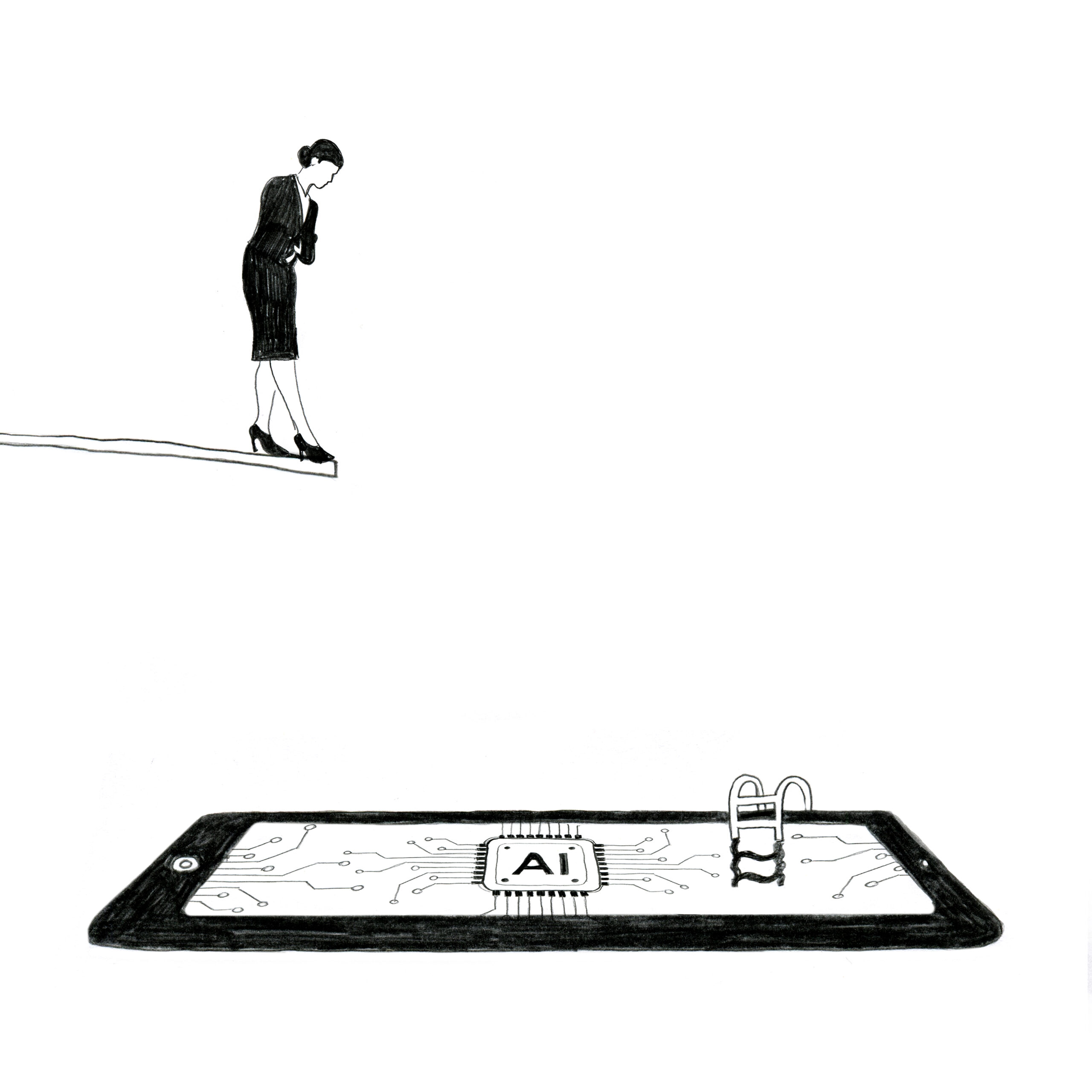
How to lead AI adoption as a manager
This case focuses on how managers can better lead AI adoption in organisations through collaboration with the Danish union Djøf. It resulted in practical recommendations that support managers in implementing AI responsibly while aligning with organisational and societal values.
Read more

Responsible use of AI in scientific advice
This case examines how AI tools can support policymakers by synthesising scientific evidence and drafting policy advice. It emphasizes that AI should be used cautiously, with strong human oversight, ethical guidelines, and standards for credibility and transparency.
Read more